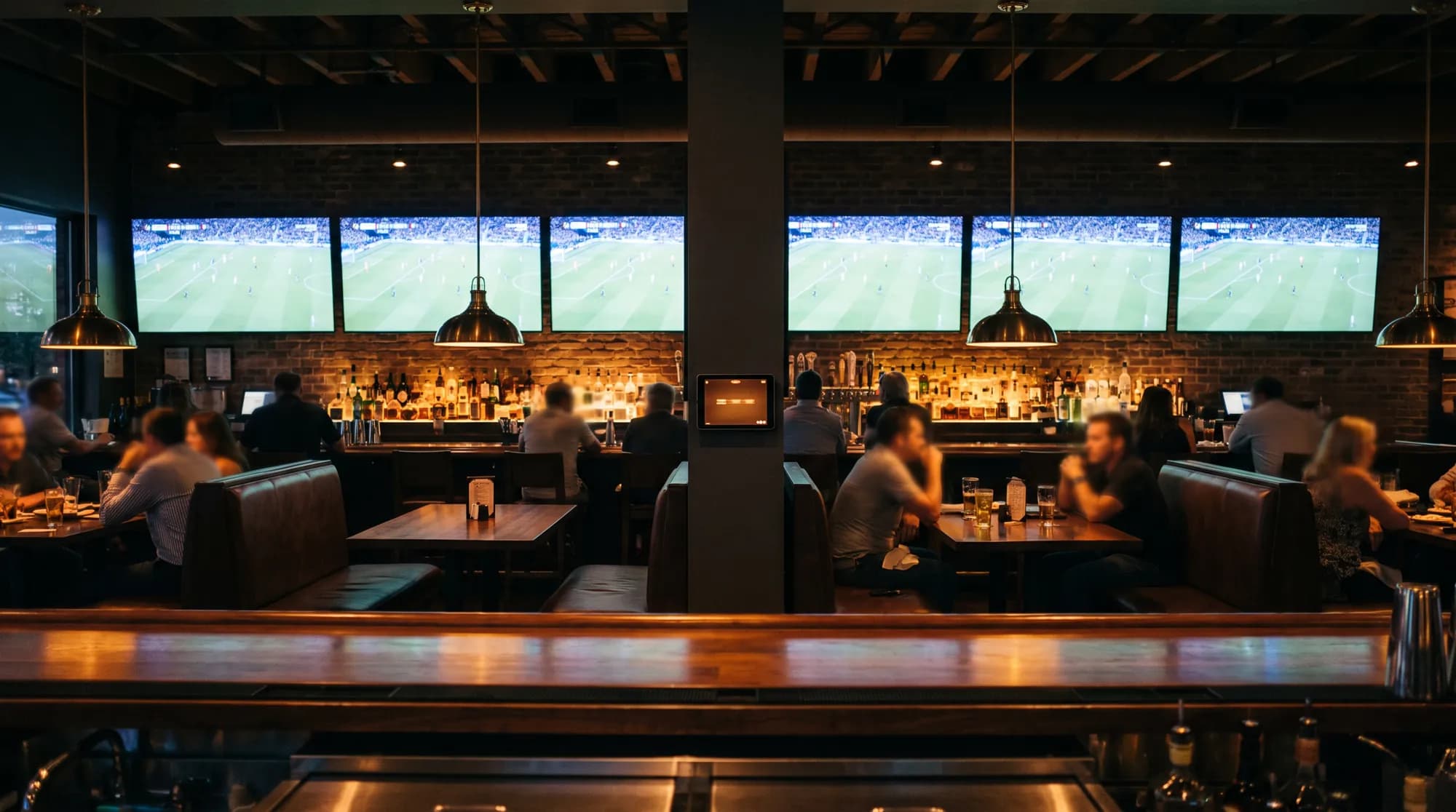
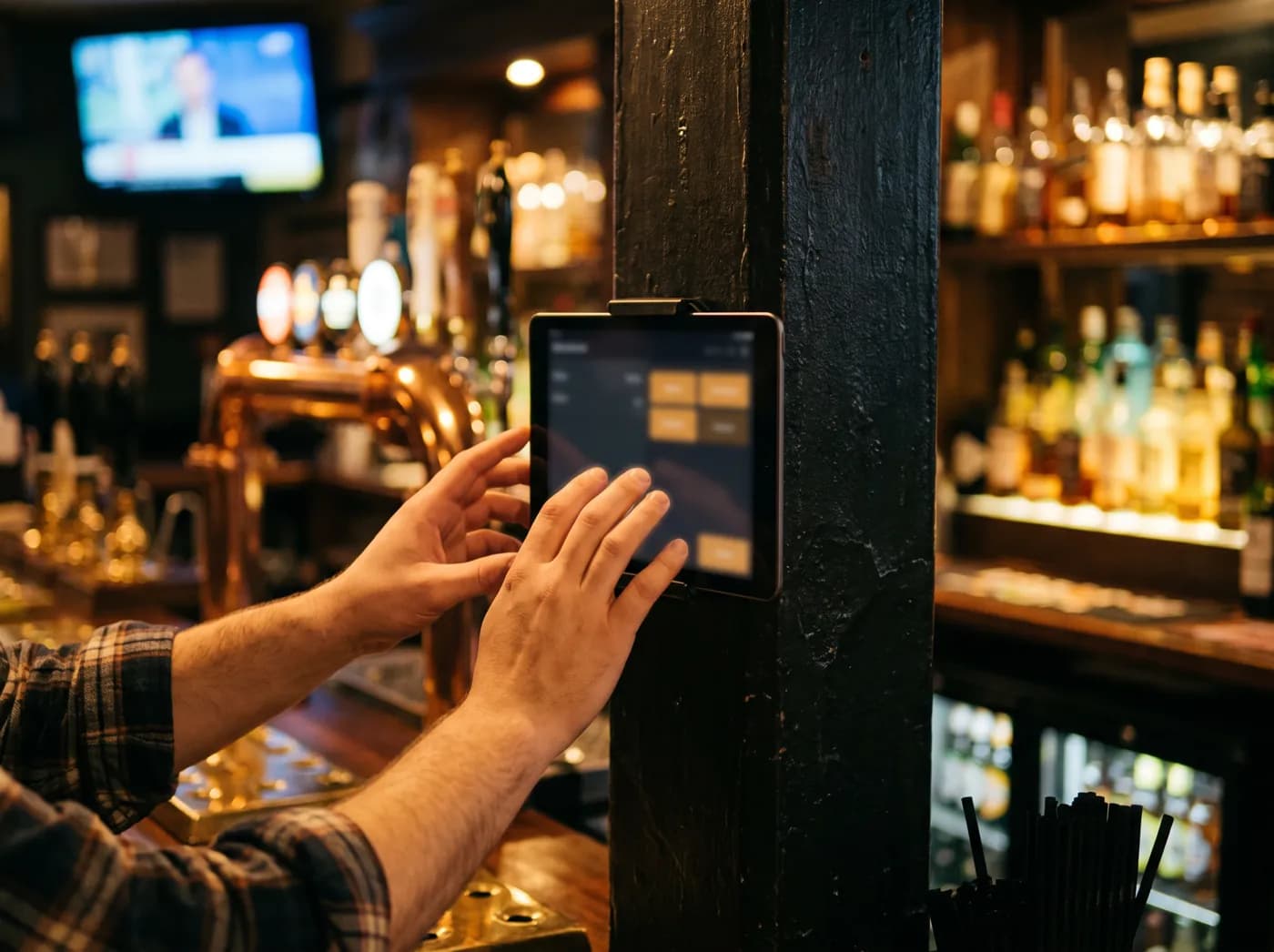
The game is on. The volume is right. Nobody went looking for a remote.
TavernSync runs the televisions, the audio zones and the video walls in your venue from a tablet on the wall — and it keeps running when your internet does not.
Runs on the equipment you already own. No rip-and-replace.
The 6pm problem
Right now, one person in your building knows how the TVs work.
They know which remote does the corner screen, which input the patio is on, and how to get the audio off the pop playlist and onto the game. When they are on shift, the room is perfect. When they are not, a customer asks and a nineteen-year-old starts pressing buttons.
The equipment is not the problem. Eleven remotes and one expert are the problem.
What you get
Six things that matter at the busiest hour of the week.
One tap sets the whole room
“Sunday Football” is one button. Behind it, every television goes to the right channel, every zone to the right source and the right level, in the right order — so the room never blares the previous source on its way to the new one.
It works when the internet is down
The hub in your building holds its own copy of the configuration and its own clock. A venue whose uplink died at four still gets the televisions on the game at seven. Losing your connection costs you remote control — it costs you nothing in the room.
Your manager can fix it from anywhere
A phone, a signal, and the room does what it is told — without anyone driving in. And if the venue is genuinely unreachable, the app says so plainly instead of pretending the command landed.
It tells you the truth about the room
Most bar audio equipment cannot report back what it is actually doing. TavernSync never pretends otherwise: a value it set but cannot confirm is shown as assumed, with the time it was set. Grey italics, not a confident number.
Your gear, driven as it is
Satellite receivers, multi-zone audio processors and video-wall switchers are driven in their own native protocols. Adding a make and model is a driver, not a refit of your rack.
Nothing dials into your venue
The hub opens a connection outward and holds it. Your firewall stays closed to inbound traffic, and the manager’s command rides back down the connection the hub already opened.
Offline first, not offline tolerant
Your uplink dies at four. Kickoff is at seven.
Most connected systems degrade to a brick when the cloud is unreachable, because the cloud was holding the state. TavernSync is built the other way round.
The hub starts from its cached configuration, brings up the device drivers, serves the wall tablets over your own network and starts the schedule engine — and only then does it try to reach us. The room is fully operational before the internet is ever consulted.
Nobody in the building finds out your connection is down by watching a television stay dark.
Honest state
A screen that disagrees with the room is worse than no screen.
Some of your equipment can be asked what it is doing. A good deal of it cannot — one-way control is the only mode many audio processors document. So TavernSync shows you which is which, everywhere, rather than averaging them into one confident-looking number.
Main barCh 206confirmedPatio volumeSet to 402m agoDining zoneSet to source 2just nowVideo wallOnconfirmed
Italic and grey means TavernSync sent the command and it was accepted — not that the device confirmed it.
See it running in a room like yours.
Tell us what is in your rack and how many screens you are fighting with. We will show you what one tap looks like in your venue.